Friday, May 28, 2010

Sunfeast World 10k - Bangalore 2010


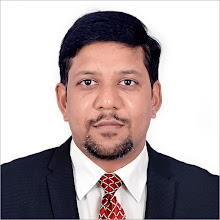
Post the recent success at Sunfeast world 10k run - I am tempted to blog my experience.

Through out my school and college days, I was active in sports. I would take part in almost all running events and have won several prizes at school level competitions. I gave up running in 1993, I kind of retired from athletics.

Many many years later, in 2009 - It was the paranoia of falling victim to lifestyle related diseases like Diabetes or BP or something else that I began doing some morning walks in the nearby parks. Serious running did not occur to me until Shobana bought a one year membership at a local sports club that had a Cardio, Gym. Swimming pool, Tennis courts and other sports facilities. She prodded me take up some sports activity and I choose the Cardio gym.

I began by doing some very mild cycling & cross trainer. Tread mill started a few weeks later at speeds of 3 and would gradually scale it upto 9. When I got comfortable with these levels - I pushed myself to the next level which was starting TM at 3 with inclination of 15 and reducing inclination and increasing speed at the end of every minute. I started enjoying these kinds of experiments. My family and friends appreciated the change (fat loss) in me, this led to increase in efforts to lose further fat. Virtuous circle - I must say.

During these times I choose 4 activities - Jogging (road) / Yoga / Swimming / Gym (TM + weights). I promised myself that I would do at-least one of activities every day and all four on the weekends. I did follow this strictly and also gave up sugar and sweets for 6 months. My weight dropped by over 10kgs and I was overflowing with energy. Jan 2010 - I started training for 10k run, on an average I clocked 55+minutes on the road and less than 50 minutes on the TM. I was all set for the Sunfeast 10k run.

23 May 2010 - Sunfeast world 10k - I finished the run in 58.10 min, with a ranking of 626 out of nearly 7000 runners
Feeling very excited and sense of achievement.

Tuesday, May 11, 2010

Don't lose your mind lose your weight - Rujuta Diwekar

Every time we talk about weight loss - we actually mean fat loss.
Stop worring about weight gain/loss. Manage your lifestyle - health will follow!

What diet is not:
Diet is not starvation. There is nothing like 'going on a diet'.
Compensation diet, detox diet are all bullshit.
Everything herbal is not good - Nicotine, Marijuana are herbal too!
Any diet program that discourages exercise is bullshit/worthless.
Human body is designed for continuous activity.
Avoid low fat / sugar free alternatives - they are mostly marketing tricks.
Avoid Juices - instead go for whole fruits - avoid using a knife - eat full fruits.
There is nothing like safe/ fattening food, everything that is eaten judiciously, at the right time in the right quantity is good.
Never go on diet - modify your lifestyle.

How to eat - relearn
Like our heart is size of our fist, our stomach is size of both our palms.
Fasting is a no-no. Like we cannot rest our heart - we should never rest our stomachs.
Our digestive system is at its best between 7-10am, it slows down after sunset.
Overeating is eating beyond one's capability to digest at that point in time.
Be attentive to your stomach while eating, don't overeat - know your threshold and stop just before it.
Don't eat to overcome boredom or as entertainment.
Guidelines:
*No phone, TV or computer while eating, serve small quantities and don't overeat.
*Drink a glass of water while eating, chew slowly and thoroughly.
*Don't rush off after eating, wait at table or rest for sometime.
Misunderstanding about wasting food - people think that leaving food behind is waste - answer is No. Serve the right quantity and eat right amount but if for some reason you cannot finish what you served - leave it. By over-stuffing, we are not going to help anyone - maybe we are going to do more harm than good.
5 Nutrients: Carbohydrates, fats, proteins, vitamins, minerals
5 rules: Always eat fresh food, cook in small quantities, Eat whole vegetables/fruits, be loyal to genes, eat local produce.
5 senses: Eyes to enjoy watching the food, nose to smell fresh food, Skin to feel, Mouth to taste and ears to hear the silence/sounds of chewing.
6th rule: have a calm state of mind.
A restless mind converts most of the food into fat, restlessness seen as danger and lesser amount of digestive juices released.
Don't be bothered about how many calories a food has, how many calories a person is burning, what is weight of a person or the serving size of the dish, be sure that food has enough nutrients.

What to eat - rethink
Carbs - provide energy to our body. Brain needs carbs to think.
Glycemic index (GI) and Glycemic load (GL).
High GI Carbs get converted into glucose very quickly and hence fat.
Low GI have better chance of getting converted into energy and hence low fat.
In absence of carbs, fat cannot be utilised for energy.
Stick to low GI food, high GI only after workout or when body needs instant energy.
Type 2 diabetes is caused by consumption of high GI food, stress, obesity and lack of exercise.
High GI food like desserts will certainly get converted into fat if eaten with food, eat it a separate snack/meal it will get converted to energy.
When GI is high keep the GL very low.
Fruits - eat them early in the morning or as a snack when stomach is empty, don't eat with food - its fructose will certainly get converted into fat.
Alcohol - very high carbs, alcohol is foreign to the body and hence digestion is put on hold,while alcohol is being metabolized which leads to fat. Also alcohol is high on estrogen - the reason why some men do girly things when drunk. Alcohol puts fat around the stomach area. Avoid alcohol, but if you have to then eat something first and drink lots of water between drinks.
High GI foods - Biscuits, cakes, pizza, soft drinks, desserts, deep fired items, sugar, alcohol, all fruits, white rice, white bread.
Low GI foods - Wheat, jowar, bajra, ragi, idli, dosa items, lentils, besan, oats, barley, rawa.

Proteins- build and repair our body.
Amino acids are the building blocks our proteins.
IAA (Indispensible Amino Acids) and DAA (Dispensible Amino Acids).
IAA needs to be supplied to body via food, DAA can be manufactured by the body.
Methionine is an IAA that helps the body to increase the circulation of fat and hence converting it to energy (fat burning). It is found in fish, eggs, milk products and whey.
Glass of milk in the night helps in good sleep as it has tryptophan, which helps in relaxing the brain and inducing sleep.
Proteins help in converting exercise into an anti-aging activity.
Exercise without "Post workout meal of proteins and high GI carbs" is useless.
Feed extra protein to body - it gets converted into fat.
Feed less carbs to body - proteins get converted to energy, losing its purpose.
Balance diet is best.
Meat, Chicken, fish, egg white, banana, Milk products, soy, legumes- proteins.
Non veg high in fat and low in fiber. Avoid red meat. Soy is high on estrogen.
Protein deficiency leads to dark circles, chipped nails, hair loss, anger.
Protein supplement required when working out - try whey proteins.
Proteins are difficult to digest, a calm mind helps better digest proteins.

Fats
Stored food for bad times, survival need & process of evolution.
Eat fat to lose fat.
Anti-aging: maintain optimum weight, include healthy fats likes nuts, fish, diary fats.
Saturated fats are solid in room temperatures, animal fats are tough on body while diary fats are easy.
Unsaturated fats are liquid in room temp. EFA (Essential Fatty Acids) need to supplied via food.
MUFA (Mono Unsaturated Fatty Acid) - Olive oils, almonds, peanuts, peanut oil, rice barn oil, avocados - good for heart
PUFA (Poly Unsaturated Fatty Acid)
Omega 6 - sunflower oil, kardi oil, soy bean oils
Omega 3 - PUFA - Flax seeds, Walnuts, fish.
Trans fats - Converting unsaturated fats to saturated fat. Used in hotels and commercial food items. Avoid these as they increase LDL (Low Density Lipo-proteins) or bad cholesterol.
Fats are good for healthy heart, good looks, hair, skin. also reduces the GI of foods.
Avoid fats like - red meat, deep fried, desserts, biscuits, cakes, pizza.
Deep fried is ok as long as it home made from fresh oil (don't recycle) and once a month or so.
1 teaspoon of ghee per day per person is just fine.
Avoid using aluminium for cooking.

Vitamins & Minerals
These don't work in isolation, has to be part of food with carbs, protiens, fats and other vitamins and minerals. Coalition rules.
Vitamin A
Milk, dark leafy vegetables, orange / yellow vegetables and in liver and kidney.
Needed for immune system, eyesight, growth & development, antioxidant.
Vitamin D
Sunlight exposure produces Vit D, fish and egg yolks have Vit D.
Needed for calcium absorption, lack of which leads to bones and joint pains.
Vitamin E
PUFA sunflower oil, kardi oil, soy bean oils, Flax seeds, Walnuts, fish, asparagus, green leafy vegetables, berries, tomatoes.
Needed for protecting heart, keeps skin young, prevents nerve & muscular weakness and is powerful oxidant. Good after eating excessive fats.
Vitamin K
Green leafy vegetables, green peas, green tea, oats, whole grain
Needed for blood clotting, healthy bones, excessive bleeding during periods
Vitamin C
Fruits, vegetables
Needed for immunity,respiratory systems, powerful anti-oxidant, smokers, stressed out people
Vitamin B
Fresh fruits, whole grains, nuts, eggs, fish, cheese, curd
Needed for digestion, nerve functioning, prevents depression, FiberBrown rice, whole wheat, barley, ragi, jawar, bajra, legumes
Prevents constipation, regularize digestion, prevents over eating, zero calories.
Minerals
Calcium
Diary products, tofu, green leafy vegetables, nuts, seeds.Needed for health of bones, joints, teeth, muscular contraction, blood clotting and controlling BP. Use supplements.
Iron
Meat, fish, eggs, bajra, jowar, whole grains, vegetables, fruits
Needed as it is part of hemoglobin which transports oxygen to from lungs to tissues and co2 from tissues to lungs
Selenium, zinc, chromium,magnesium, manganese, copper
Fish, egg, grains, fresh vegetables
Needed as they anti-oxidants, promote fat burning, prevents insulin insensitivity.
Zinc and chromium - good skin and hair growth, testosterone function, muscle growth
Supplements - Good for prevention of any diseases. Must for urban people.
Water
Water carries the nutrients within the body and is hence very essential.

The four principles of eating right
1. Never wake up to tea or coffee
Instead eat real food within 10-15 minutes of waking up which will increase blood sugar & energy levels which will increase metabolic rates which will burn more fat. Decrease acidity, bloating, reduces over-eating chances and less chance of getting fat.
2. Eat every 2 hours
Which will lead to a conducive environment in the body to burn fat, fewer calories converted to fat, active mind, flatter stomach.
3. Eat more when you are more active and eat less when you are less activeWhich will lead to body becoming efficient calorie burner, which will increase metabolic rate, which helps in staying energetic and lose fat.
4. Finish our last meal at least 2 hours prior to sleeping
Which leads to most of the food being digested before going to bed, sound sleep, body is free to do repair work, which will make fat burning effective.

Inculcating awareness
Information with awareness is useless, know when to eat your desserts. List all that you ate for 3 days and analyze it - 3 day diet and activity recall.

Crossing the bridge from knowing to doing
1. Wake up closer to sunrise
2. Eat within 10 minutes of waking up
3. Within an hour of meal 1,eat a nice home cooked breakfast
4. Eat every 2 hours after meal 2
5. Eat your dinner within 2 hours of sunset
6. Sleep at fixed time.

10 things to be careful about:
1. Refusing to learn from experiences
2. Believing that there is magical way to losing fat
3. Not taking care of yourself
4. Being critical of yourself
5. Eating too much at a time
6. Eating after a long gap
7. Taking a 'drink beer & laze around' holiday
8. Expecting results in first week
9. Overdoing it
10. Not realizing that there is much to life than your weight

10 things to do:
1. Cook something once a week
2. Maintain silence for sometime every day
3. Go without salt once a month
4. Wake up a little earlier than you do and sleep a little earlier too
5. Try to adopt a cross legged posture while eating
6. Squatting position in loo
7. Keep up your favorite hobby
8. Take a Himalayan holiday
9. Learn something new every year
10. Get your family and friends support you in your journey of getting fit.
Start Now!

Thursday, May 6, 2010

Fictional (2)

2 States - Chetan Bhagat
5 point someone - Chetan Bhagat

Monday, April 26, 2010

Pabrai__Mohnish_-_The_Dhandho_Investor

Patel motel Dhandho
Gujarati patels thrown out of Uganda in 1972 by Idi Amin- 'Africa for Africans', some reached America with very little money in their hands, bought small (loss making) motels and ran it themselves, the motel not only gave them a place to stay it also gave them a business to run, with their own expenses being very low they could easily turnaround the business. The patels mastered this business and today the motel industry is dominated by patels in US.
Heads, I win; tails, I don’t lose much!
Manilal Dhandho
Came to US when his brother sponsored him in 1991. Though an accountant - he started working in a gas station, then became an accountant and did two jobs till 9/11 happened (motel industry crashed), after which he bought a motel. “Few Bets, Big Bets, Infrequent Bets.”
Heads, I win; tails, I don’t lose much!
Virgin Dhandho
Richard Branson who was running a music company started a Airline company by leveraging. All you need to do is replace capital with creative thinking and solutions.The Virgin Group today is a privately held group of 200+ businesses with about $7 billion in annual revenue. It generates about $600 to $700 million a year in free cash flow. The common ingredient in virtually all 200+ businesses is that there was very little money invested in any of them at startup.Virgin Pulse into Target stores, Virgin Mobile - Virgin’s cell phone service, Virgin One Account - RBS Bank account. Branson is an ultra low-risk, ultra high-return VC.
Heads, I win; tails I don’t lose much!
Mittal Dhandho
Mittal started in 1976 with a single, small, nondescript steel mill in Indonesia. Using Marwari logic of - invested capital to be returned in the form of dividends in no more than three years - he has turned around sick mills into profitable ones.They expect that, after having gotten their money back, their principal investment continues to be worth at least what they invested in it. They expect these to be ultra low-risk bets.
Transtech Dhando
Pabrai started Transtech with 30K from his 401k and 70k from Credit card in 1990 while still working at Tellabs. When revenues hit 200K he quit his job and invested his full time in Transtech. In 2000 the entire business was sold.
Heads, I win; tails I don’t lose much
The Dhandho Framework
1. FOCUS ON BUYING AN EXISTING BUSINESS.
Having an ownership stake in a few businesses is the best path to building wealth. And with no heavy lifting required, bargain buying opportunities, ultra-low capital requirements, ultra-large selection, and ultra-low frictional costs, buying stakes in a few publicly traded existing businesses is the no-brainer Dhandho way to go.
2. BUY SIMPLE BUSINESSES IN INDUSTRIES WITH AN ULTRA-SLOW RATE OF CHANGE.
We see change as the enemy of investments . . . so we look for the absence of change. We don’t like to lose money. Capitalism is pretty brutal. We look for mundane products that everyone needs.—Warren Buffett
Look at intrinsic value of a busineess. Look at the free cash flow the business generates and estimate it for the next 10 years. Look at this figure w.r.t to todays value of that money and sum it up. That is the value of the business. Assuming no hiccups in its execution, no change in consumer behavior, and the ability to grow revenues and cash flows pretty dramatically over the years.
Five ascending levels of intelligence: “Smart, Intelligent, Brilliant, Genius, Simple.”
3. BUY DISTRESSED BUSINESSES IN DISTRESSED INDUSTRIES.
Never count on making a good sale. Have the purchase price be so attractive that even a mediocre sale gives good results —Warren Buffett
The entrance strategy is actually more important than the exit strategy —Eddie Lampert
Be fearful when others are greedy. Be greedy when others are fearful —Warren Buffett
Markets aren’t fully efficient because humans control its auction-driven pricing mechanism. Humans are subject to vacillating between extreme fear and extreme greed.Buying Motel and sick steel factorires are all part of this strategies.
4. BUY BUSINESSES WITH A DURABLE COMPETITIVE ADVANTAGE—THE MOAT.
I don’t want an easy business for competitors. I want a business with a moat around it. I want a very valuable castle in the middle and then I want the duke who is in charge of that castle to be very honest and hardworking and able. Then I want a moat around that castle. The moat can be various things: The moat around our auto insurance business, GEICO, is low cost.—Warren Buffett
Of the fifty most important stocks on the NYSE in 1911, today only one, General Electric, remains in business. . . . That’s how powerful the forces of competitive destruction are. Over the very long term, history shows that the chances of any business surviving in a manner agreeable to a company’s owners are slim at best—Charlie Munger
5. BET HEAVILY WHEN THE ODDS ARE OVERWHELMINGLY IN YOUR FAVOR.
To us, investing is the equivalent of going out and betting against the pari-mutuel system. We look for the horse with one chance in two of winning which pays you three to one. You’re looking for a mis-priced gamble. That’s what investing is. And you have to know enough to know whether the gamble is mis-priced. That’s value investing —Charlie Munger
The wise ones bet heavily when the world offers them that opportunity. They bet big when they have the odds. And the rest of the time, they don’t. It’s just that simple—Charlie Munger
We might invest up to 40% of our net worth in a single security under conditions coupling an extremely high probability that our facts and reasoning are correct with a very low probability that anything could change the underlying value of the investment. We are obviously only going to go to 40% in very rare situations— this rarity, of course, is what makes it necessary that we concentrate so heavily, when we see such an opportunity. We probably have had only five or six situations in the nine-year history of the partnerships where we have exceeded 25%. Any such situations are going to have to promise very significant superior performance.. . . They are also going to have to possess such superior qualitative and/or quantitative factors that the chance of serious permanent loss is minimal. . . . In selecting the limit to which I will go in any one investment, I attempt to reduce to a tiny figure the probability that the single investment can produce a result for our portfolio that would be more than 10 percentage points poorer than the Dow. —Warren Buffett
6. FOCUS ON ARBITRAGE.
1. TRADITIONAL COMMODITY ARBITRAGE
2. CORRELATED STOCK ARBITRAGE
3. MERGER ARBITRAGE
4. DHANDHO ARBITRAGE
The key to investing is not assessing how much an industry is going to affect society, or how much it will grow, but rather determining the competitive advantage of any given company and, above all, the durability of that advantage —Warren Buffett
7. BUY BUSINESSES AT BIG DISCOUNTS TO THEIR UNDERLYING INTRINSIC VALUE.
. . . the function of the margin of safety is, in essence, that of rendering unnecessary an accurate estimate of the future —Benjamin Graham
The Intelligent Investor is still the best book on investing. It has the only three ideas you really need:
1) Chapter 8—The Mr. Market analogy. Make the stock market serve you. The C section of the Wall Street Journal is my business broker—it quotes me prices every day that I can take or leave, and there are no called strikes.
2) A stock is a piece of a business. Never forget that you are buying a business which has an underlying value based on how much cash goes in and out.
3) Chapter 20—Margin of Safety. Make sure that you are buying a business for way less than you think it is conservatively worth.—Warren Buffett
1. The bigger the discount to intrinsic value, the lower the risk.
2. The bigger the discount to intrinsic value, the higher the return.
We bought all of our [Washington Post (WPC)] holdings in mid-1973 at a price of not more than one-fourth of the then per-share business value of the enterprise. Calculating the price/value ratio required no unusual insights. Most security analysts, media brokers, and media executives would have estimated WPC’s intrinsic business value at $400 to $500 million just as we did. And its $100 million stock market valuation was published daily for all to see. Our advantage, rather, was attitude: we had learned from Ben Graham that the key to successful investing was the purchase of shares in good businesses when market prices were at a large discount from underlying business values.. . . Through 1973 and 1974, WPC continued to do fine as a business, and intrinsic value grew. Nevertheless, by year-end 1974 our WPC holding showed a loss of about 25%, with a market value of $8 million against our cost of $10.6 million. What we had bought ridiculously cheap a year earlier had become a good bit cheaper as the market, in its infinite wisdom, marked WPC stock down to well below 20 cents on the dollar of intrinsic value—Warren Buffett
Most institutional investors in the early 1970s, on the other hand, regarded business value as of only minor relevance when they were deciding the prices at which they would buy or sell. This now seems hard to believe. However, these institutions were then under the spell of academics at prestigious business schools who were preaching a newly-fashioned theory: the stock market was totally efficient, and therefore calculations of business value—and even thought, itself—were of no importance in investment activities. (We are enormously indebted to those academics: what could be more advantageous in an intellectual contest—whether it be bridge, chess, or stock selection than to have opponents who have been taught that thinking is a waste of energy?)—Warren Buffett
Very few people have adopted our approach. . . . Maybe two percent of people will come into our corner of the tent, and the rest of the ninety-eight percent will believe what they’ve been told (e.g., that markets are totally efficient)—Charlie Munger
8. LOOK FOR LOW-RISK,HIGH-UNCERTAINTY
High risk, low uncertainty
High risk, high uncertainty
Low risk, high uncertainty - is the Dhandho choice - go for it.
Low risk and low uncertainty - is loved by market - avoid these completely.
Always take advantage of a situation where Wall Street gets confused between risk and uncertainty.
9. IT’S BETTER TO BE A COPYCAT THAN AN INNOVATOR.
McDonals, Microsoft are all copycats.
Mutual funds as a group are so large that in aggregate they look like the market. Thus, if there were no trading costs and fees associated with mutual funds, as a group, they’d deliver returns that would match the broad equity market indexes.
Despite our policy of candor, we will discuss our activities in marketable securities only to the extent legally required. Good investment ideas are rare, valuable and subject to competitive appropriation just as good product or business acquisition ideas are. —Warren Buffett
If you invest in a business, you ought to be quite content to get a data point on its valuation once a year.
Buffet
1. Small team (one man team)
2. Invest in business that have been hit by negativity
3. Report to investors only once a year.that is why he gets long term investors, has a permanent moat over his competitors (other fund managers) and leads a relaxed life/career.
If you carefully study the most successful businesses around, you’ll notice that much of it has been lifted and scaled by great executers.
Abhimanyu’s Dilemma— The Art of Selling
An investor ought to be thinking about before entering any stock market chakravyuh:
1. Is it a business I understand very well—squarely within my circle of competence?
2. Do I know the intrinsic value of the business today and, with a high degree of confidence, how it is likely to change over the next few years?
3. Is the business priced at a large discount to its intrinsic value today and in two to three years? Over 50 percent?
4. Would I be willing to invest a large part of my networth into this business?
5. Is the downside minimal?
6. Does the business have a moat?
7. Is it run by able and honest managers?
A critical rule of chakravyuh traversal is that any stock that you buy cannot be sold at a loss within two to three years of buying it unless you can say with a high degree of certainty that current intrinsic value is less than the current price the market is offering.
Warren Buffett’s two main rules are:
Rule No. 1: Never lose money.
Rule No. 2: Never forget rule No. 1.
It is very hard to make up the lost non-compounding years. Keep time value of money in mind.
A lot of great fortunes in the world have been made by owning a single wonderful business. If you understand the business, you do not need to own very many of them —Warren Buffett
Really outstanding investment opportunities are rare enough that you should really have a go at it when it comes around, and put a huge portion of your wealth into it. I’ve said in the past you should think of investment as though you have a punch card with 20 holes in it. You have to think really hard about each one, and in fact 20 (in a lifetime) is way more than you need to do extremely well as an investor—Warren Buffett
This idea (of focused value investing) has zero currency in academic circles. Investment managers don’t feel they will make enough money this way. It’s so foreign to them-Charlie Munger
Billy Rose used to say that if you have a harem of a hundred girls, you never get to know any of them very well.The trick is to know a lot about what you own, and you don’t own that many things—Warren Buffett
“few bets, big bets, infrequent bets”
To Index or Not to Index— That Is the Question
As long as there are frictional costs, the vast majority of actively managed assets will underperform the broad indexes. This will always be true. Buying a broad index is a very good option for most investors— it assures them of doing better than most of their peer investors. But we can do even better for two reasons:1. There have always been a small minority of investors and money managers who’ve successfully trounced the broad markets over long periods. These are, byand large, the Dhandho investors. It is worth studying the methods of these investors. If you want to be passive, it is very much worth the effort to find these managers and put your assets with them.2. There are lessons to be learned from the way indexes operate. Incorporating some of these index-like traits in your portfolio is likely to lead to results that are vastly superior to the broad indexes.
Arjuna’s Focus: Investing Lessons from a Great Warrior
Archery is all about being singularly focused on the target. If the archer can’t fixate on just the target, success is likely to be elusive.The best way to learn is to teach.
The Prophet
You give but little when you give of your possessions. It is when you give of yourself that you truly give. For what are your possessions but things you keep and guard for fear you may need them tomorrow? . . . There are those who give little of the much they have—and they give it for recognition and their hidden desire makes their gift unwholesome. And there are those who give and know not pain in giving, nor do they seek joy, nor give with mindfulness of virtue. . . . Through the hands of such as these God speaks, and from behind their eyes He smiles upon the earth. You often say, “I would give but only to the deserving.” . . . Surely he who is worthy to receive his days and his nights is worthy of all else from you. And he who has deserved to drink from the ocean of life deserves to fill his cup from your little stream. See first that you yourself deserve to be a giver, and an instrument of giving. For in truth it is life that gives onto life—while you, who deem yourself a giver, are but a witness—Kahlil Gibran

Monday, March 29, 2010

Rich Dad, Poor Dad - Robert Kiyosaki

Poor Dad- Love of money is root of evil / Rich Dad - Lack of money is root of evil.
Losers: Fear of losing was greater than the excitement of winning.

Lesson #1 The Rich Don't Work for MoneyMoney works for them.
Fear drives many people to jobs / work hard, then greed takes over and drives people - Expenses grow with incomes -Rat Race.
People react to these emotions and these emotions control them, Don't get trapped in these emotions - instead use your brains.

Lesson #2 Become Financial Literate.
Assets: Puts money into my pocket. Invest in assets that generate incomes.
Liabilities: Takes money away from my pocket
Poor: Job-income-expenses (poor have only expenses)
Middle class: Job-income-build liabilities-expenses (middle class buy liabilities that they think are assets)
Rich: Assets-income-expenses-assets (rich get richer) (rich buy assets)
People work for:
Owner /Shares holders of their company (making them rich)
Government (paying taxes)
Banks (servicing debts)
Wealth: person's ability to survive - say how many months one can sustain lifestyle without working.If our monthly expenses can be generated by our assets then one is wealthy.

Lesson #3 Mind Your Own Business
Keep your day job but focus on building assets that generate incomes.eg: Business that do not require my presence, stocks, bonds, Mutual funds, IOU, Income generating Real estates, Royalty, anything that generates income or appreciates with time.

Lesson #4 Taxes and the Power of Corporations
Rich can form corporations and expenses are taken care by pre-tax money. Individuals spend post tax money, corporations spend pre tax money.
Have a high Financial IQ. which consist of: Fin Literacy (Accounting) + Investing (money making money) + Understanding markets (demand/supply etc) + Law.

Lesson #5 The Rich Invent Money
It is not the degrees or grades that count in the real world what counts is Guts, balls, bravdo, auadcity, cunning, daring, brillance, tenacity.
In real world it is not the smart that get ahead it is the bold.
Don't get scared with money, people who play it safe will never make it big.
Luck is created.
Money is not real. Mind is real, train your mind to create Money.
Simple math and common sense is what is needed to do well financially.

Lesson #6 Work to Learn— Don't Work for Money
Just Over Broke - JOB!
Workers work hard enough to not be fired & owners pay just enough so that workers wouldn't quit.
Seek work to learn not to earn, look at long term.
Important skills to run business: Managment of Cash flow, systems (self and work life balance), people
Important specialised skills to run business: Sales and understanding marketing. Communciation is key to sales skills.

Getting started:
1. I need a reason greater than reality. Why do you want to be rich?
2. I choose daily. I choose to be rich.
3. Choose friends carefully. Learn from them. Learn what to do or what not to do?
4. Master a formula and then begin to learn a new one.
5. Pay yourself first. Have self discipline and have self control. Keep expenses low.
6. Pay your brokers well.
7. Be an Indian giver. RoI. Buy an stock, hold for some time and sell it to the extent of your cost, let the profit be there earining for you.
8. Assets should luxury, not loans. If you are smart you can rule money, if not money will rule you.
9. Need for heros. eg: Warren Buffet is my hero.
10.Teach and you will receive. Give before you will receive, like give a smile and you will get it back and give money and you will get it back.

Take action:
Your mind and your time are great assets.
Spend each Rupee wisely, build assets. You choose to be rich/poor/Middle class.

Friday, March 12, 2010

European & other Langauges -08

French: Comment tu-vas? / Bonjour
Danish (Denmark): Hvordan har De det?
Dutch (Netherlands): Hoe gaat het?
German: Wie geht's?
Spanish: Como estas?
Portuguese: Como esta?
Hawaiian: Aloha (hello), Pehea oe?
Afrikans - Zulu: Unjani?

Asian foreign Langauges -10

Sinhalese (Sri Lanka): Kohomada?
Tibetan (Tibet): Debo yimbsa?
Cantonese (China): Nei ho ma?
Mandarin (China): Ni hao ma?
Japanese: Arigato gozaimasu (Thank you)
Korean: Annyong haseyo?
Thai (Thailand): Thon Thon pawn pawn (Gentlemen and Ladies)
Malay (Malaysia): Apa khabar?
Nepalese: kasto cha? Answer: Ram bharso!
Arabic: kayfa ḥalik?

East Indian Lanugages -04

Bengali: Kamon aachoo?
Oriya: Kemthi aachanthi?
Naga: Kinka sey?
Manipuri: Karam thouri?
Khasi: Kumno fi long? / Khulbei (Thank you)

North & West Indian Languages -07

Hindi: Ap kaise hain?
Marathi: Kase kaa-ya?
Gujarati: Kem chho?
Rajasthani: Kaiyna ho bhai sa?
Punjabi: Tuhaadaa kee haal hai jee? / Kiddaan?
Himachali(?): Kede ho?
Kashmiri: Varrey Chao?

South Indian Languages - 09

Tamil: eppadi irukeenga?
Kannada: Hege idhira?
Telegu: Baagunnaaraa?
Malyalam: Sukhamano?
Badaga: oolg ethiya?
Toda: ooth ushiya?
Tulu: Encha uller?
Coorgi: ennane ullira?
Konkani: Tu kashi assa?